Nail Salon Labor Laws in 2026: What Every Owner Must Know Before Getting Fined
May 2026 · 14 min read
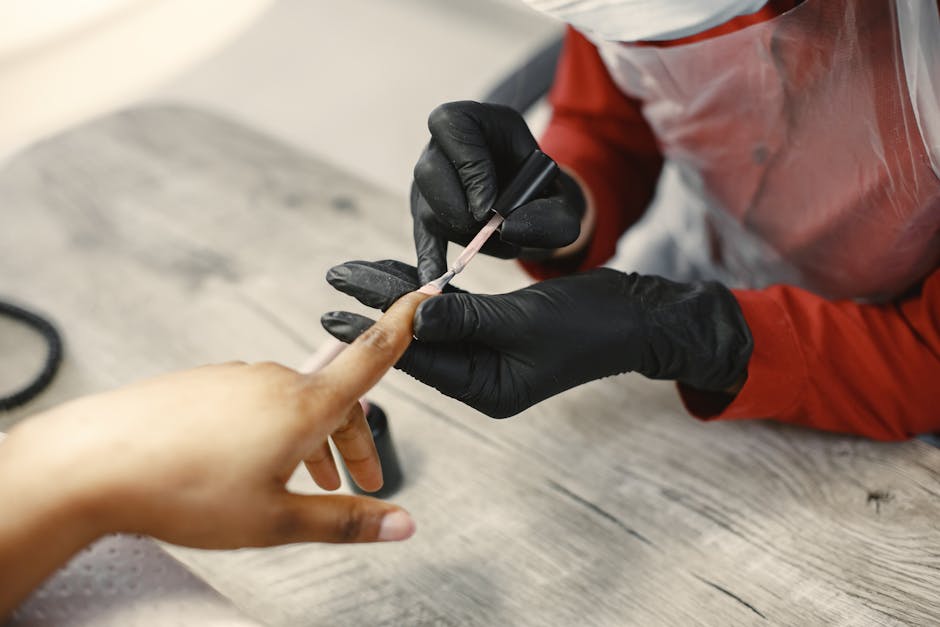
It is 9:15 on a Tuesday morning. Two people in suits walk into your nail salon. They are not here for manicures. They flash Department of Labor credentials and ask to see your payroll records, tip distribution logs, and employee files for the last three years.
Wage-and-hour investigations do happen, and the rules differ by state and city. This guide summarizes the main federal rules plus a few state examples. It is general information, not legal advice — check your state labor department and talk to an employment lawyer before changing how you pay people.
No legal jargon: the rules, where to read them, and what to check.
Key Rules to Know
California: Tips Belong to the Employee
California Labor Code section 351 protects gratuities. Here is what it means for your salon:
You cannot take tips. No employer or agent of the employer (which includes managers and owners) may collect, take, or receive any gratuity left for an employee. If a client leaves a $20 tip, the full $20 belongs to the employee it was left for.
The part that catches many salon owners off guard: in California, you cannot deduct credit card processing fees from tips. Example: if a client tips $20 on a card and your processor charges 2.9%, you absorb the $0.58 and the employee gets the full $20, paid no later than the next regular payday. The Labor Commissioner may investigate and issue citations or file civil actions for tips taken or withheld.
Owners and managers acting as the employer’s agents cannot share in employee tips. Tip pooling among staff can be allowed, but there are rules about who may be included — check with the Labor Commissioner or an employment lawyer before setting one up. If you are the owner standing behind the desk, you are not part of the tip pool.
New York Minimum Wage: No Tip Credit for Nail Workers
2026 minimum wage examples (check city and county rates too). Sources: NY DOL, California DIR, Washington L&I, DOL Fact Sheet #15.
| Location | 2026 Rate | Tip Credit Allowed? |
|---|---|---|
| NYC, Long Island, Westchester | $17.00/hr | No (nail salons) |
| Rest of New York State | $16.00/hr | No (nail salons) |
| California (statewide) | $16.90/hr | No (any industry) |
| Washington State | $17.13/hr | No |
| Federal (FLSA) | $7.25/hr | Yes ($2.13/hr minimum cash wage) |
Critical for New York nail salons: Unlike restaurants, New York has not allowed a tip credit for nail salon workers since December 31, 2020 (NY DOL nail salon industry page). You must pay the full minimum wage — $17/hr in NYC, Long Island and Westchester — on top of any tips.
Misclassification: Employee or Contractor?
The distinction matters: if your nail technicians set their own hours, use their own supplies, serve their own client base, and receive 1099s — they might legitimately be independent contractors. But if you control their schedule, provide their supplies, assign them clients, and require them to follow salon policies — they are likely employees, regardless of what your contract says. The legal tests differ between federal law and states (California’s is strict), so get advice before using 1099s.
Misclassification can be expensive: back wages, overtime, benefits, employer-side payroll taxes, and penalties. In California, Labor Code section 226.8 sets civil penalties of $5,000–$15,000 per violation for willful misclassification, and $10,000–$25,000 per violation for a pattern or practice.
Charges to Workers That Often Break the Rules
Under the FLSA, deductions or required purchases that push a worker below minimum wage are generally not allowed, and many states are stricter. Check your state rules before charging workers for:
- Job applications or hiring fees — charging workers to “buy” a job can violate wage laws
- Training costs — required training is generally paid work time
- Supplies and tools — nail polish, files, implements, and disposables are usually treated as employer expenses
- Breakage or customer complaints — many states restrict docking pay for mistakes
- Uniform costs — if you require specific attire, rules on who pays vary by state
- Booth rent disguised as employment — if you control the worker, they are likely an employee regardless of whether you call their payment “booth rent”
Form I-9 and Work Authorization
Every U.S. employer must verify identity and work authorization on Form I-9 (see USCIS I-9 Central). The basics:
- Every employee must have a completed Form I-9 completed (Section 2) within 3 business days of the employee’s first day of work
- You must examine the employee’s documents — a photocopy is not acceptable unless you use a DHS-authorized alternative procedure
- You cannot specify which documents to present (anti-discrimination rule)
- I-9 forms must be retained for 3 years after the date of hire or 1 year after employment ends, whichever is later (USCIS M-274)
- E-Verify is mandatory in some states and for some employers
Civil fines for I-9 paperwork errors and for knowingly hiring unauthorized workers are assessed per form and adjusted for inflation; check current amounts on USCIS or ICE. Knowingly hiring unauthorized workers can also carry criminal penalties.
Practical tip: Keep a reminder for every work-permit expiration date that needs reverification. A calendar or software reminder helps, but it does not replace a properly completed and retained Form I-9.
Overtime: Rules Salons Often Get Wrong
Federal law requires overtime pay at 1.5x the regular rate for hours worked over 40 in a workweek for non-exempt employees (DOL overtime). California goes further: 1.5x after 8 hours in a workday and double time after 12 hours, plus seventh-consecutive-day rules (California DIR).
Common mistakes:
- Averaging hours across two weeks — illegal. Each workweek stands alone. If someone works 50 hours in week one and 30 in week two, you owe 10 hours of overtime for week one.
- Not counting prep time — if technicians arrive early to set up stations, that is compensable work time.
- Skipping meal breaks — California requires a 30-minute meal break for shifts over 5 hours and a second meal break for shifts over 10 hours. If a required meal period is not provided, you owe one additional hour of pay at the regular rate for that workday (California DIR).
- Off-the-clock texting — responding to client messages or booking confirmations outside of work hours can count as work time.
Your Compliance Checklist
Print this. Tape it to the wall in your back office. Go through it this week.
- Every employee has a current, properly completed I-9 on file
- All workers classified as employees (not independent contractors) unless they genuinely meet the independent contractor test
- Minimum wage paid at or above your state requirement (check city/county rates too)
- No tip credit applied to nail technician wages (in NY and CA)
- Tips distributed in full — no deductions for breakage or management; no card-fee deductions in CA (federal law allows only the proportional fee)
- Overtime tracked and paid correctly (weekly under federal law, daily in CA)
- Meal and rest breaks documented
- Any charges to employees for supplies, training, uniforms, or hiring checked against federal and state rules
- Workers' compensation insurance active
- Wage notices posted in a visible location in all required languages
How Your POS System Helps You Stay Compliant
A salon POS is not just for ringing up services. Good records help when questions come up:
- Time clock and tip tracking — clock-in/out records and tips recorded per employee
- Overtime tracking — hours over 40 a week (or 8 a day in CA) are visible in your records
- Break tracking — records meal and rest breaks
- Commission calculation — clear records that make disputes easier to resolve
FAQ
Can I deduct credit card processing fees from employee tips?
In California, no — Labor Code section 351 requires paying the full tip without deducting processing fees. Under federal law, DOL Fact Sheet #15 says an employer may deduct only the proportional card fee, and not below minimum wage; some states prohibit it. Check your state law. When in doubt, do not deduct.
Do I need to pay overtime to nail technicians?
Usually. Most nail technicians are non-exempt employees entitled to overtime pay. Federal law requires 1.5x pay for hours over 40/week. California requires 1.5x after 8 hours/day and 2x after 12 hours/day. Narrow exemptions exist (for example, some commission-paid employees of service businesses), so confirm with an employment lawyer before treating anyone as exempt.
What happens if I get caught misclassifying workers?
You owe back wages, unpaid overtime, unpaid employer-side payroll taxes (FICA, FUTA, state unemployment), benefits, and penalties. In California, willful misclassification carries civil penalties of $5,000–$15,000 per violation ($10,000–$25,000 for a pattern or practice). The IRS may also review your federal tax filings. In serious cases, criminal charges can apply.
My technicians prefer to be independent contractors. Is that enough?
No. Worker classification is based on the actual working relationship, not mutual preference. If you control how, when, and where they work, they are likely employees under the law regardless of any written agreement. Ask an employment lawyer about your state’s test.
I operate in a different state. Do these rules apply to me?
Federal FLSA protections apply everywhere, and many states and cities set higher minimum wages and their own tip rules. Check your state labor department, and talk to an employment lawyer if you are unsure. Getting compliant now is cheaper than getting compliant after an investigation.
Stay Compliant with the Right POS
KwickOS includes a time clock with overtime and break tracking, tips per employee, commission management, and labor cost reports.
Learn More →